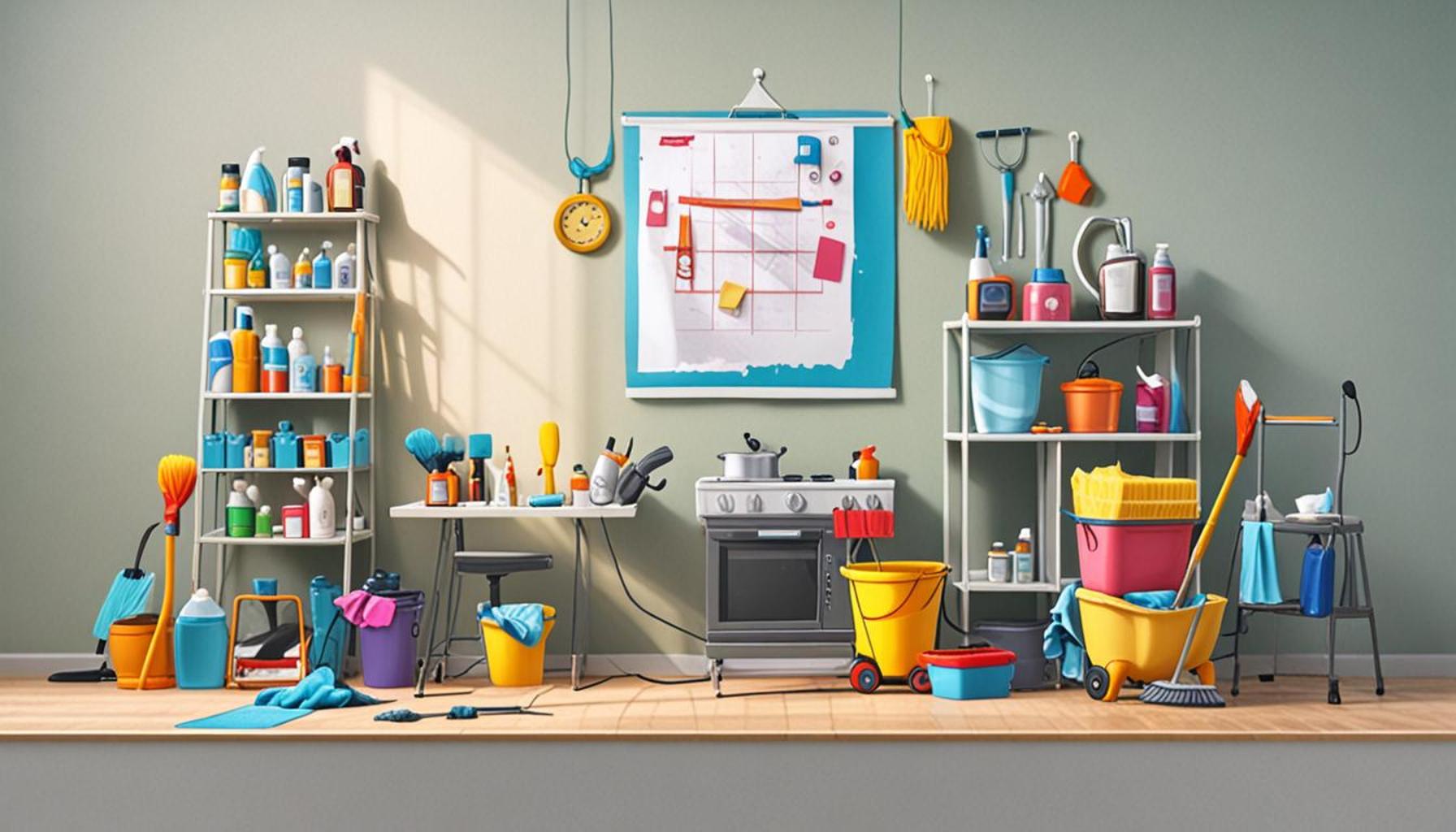
How to prioritize cleaning tasks in a weekly schedule to maximize efficiency

Maximizing Your Cleaning Efficiency
Cleaning can often feel overwhelming, especially when life gets busy with work, family, and social obligations. However, by strategically prioritizing cleaning tasks, you can transform this chore into a manageable and effective routine that integrates seamlessly into your daily life.
To help streamline your cleaning process, consider the following essential tips:
- Daily Tasks: Focus on high-impact areas like the kitchen and bathroom. These spaces often accumulate dirt and grime quickly due to daily usage. For instance, wiping down countertops and cleaning out the sink every day can prevent buildup, making weekly deep cleaning less daunting.
- Weekly Chores: Allocate time for less frequent tasks such as vacuuming, dusting, and changing bed linens. Designating a specific day of the week for each of these chores not only helps break down the workload but also ensures that no area is neglected over time. For example, you might choose to vacuum and mop the floors every Saturday morning.
- Monthly Duties: Include deeper cleaning tasks like washing windows, scrubbing baseboards, or organizing closets. These tasks can be scheduled for the first weekend of each month or whenever you have a bit more free time. Consider developing a checklist to ensure you cover all necessary areas, making your monthly cleaning sessions more systematic.
By following this structured approach, you can allocate your time more effectively, resulting in less clutter and reduced stress. According to studies, decluttering can enhance productivity, leading to a more efficient week. In fact, a clean space can positively influence your mood and energy levels, creating an inviting and comfortable home environment.
Additionally, leverage technology to boost your cleaning efficiency. Utilizing tools such as digital calendars or specialized cleaning apps can help you track your progress and adapt your schedule as needed. For instance, applications like “Clean My House” allow you to set reminders for recurring tasks, helping you stay on top of your chores without added stress. With a little planning and the right tools, you can enjoy a cleaner space without sacrificing your valuable time.
In the following sections, we’ll delve deeper into practical methods to help you prioritize cleaning tasks that easily fit into your weekly schedule, making the process feel less burdensome and more rewarding.

DISCOVER MORE: Click here to learn about effective group cleaning strategies
Strategic Planning for Cleaning Tasks
Effective cleaning requires not just effort but also thoughtful planning. To prioritize tasks effectively within your weekly schedule, consider breaking down your cleaning routine into manageable categories and making use of a priority matrix—this can help you visualize which tasks need immediate attention and which can wait. Here are several strategies to assist you in organizing your cleaning agenda:
- Assess Your Space: Take a closer look at your home and identify which areas need the most attention. High-traffic areas such as living rooms, kitchens, and bathrooms should be prioritized over less frequented spaces like guest bedrooms. By focusing on the most utilized areas first, you can enhance the overall cleanliness of your home and improve your daily living environment.
- Set a Time Limit for Each Task: Allocate specific time blocks for each cleaning task. This not only helps you stay focused but also creates a sense of urgency. For example, decide to spend no more than 30 minutes tidying up the living room. Short, timed sessions encourage efficiency and can deter procrastination, ultimately leading to a more effective cleaning routine.
- Incorporate Family or Housemates: If you live with others, enlist their help. Assign specific responsibilities to each person, making cleaning a team effort rather than a solo endeavor. For instance, one person could handle vacuuming while another is responsible for mopping. This collective approach not only divides the workload but can turn cleaning into a more enjoyable activity, potentially leading to better results.
- Focus on One Task at a Time: Rather than multitasking, concentrate on completing one cleaning task before moving to the next. This approach reduces distractions and helps you maintain a higher quality of clean throughout your home. You may find that when you focus on vacuuming all carpets first, rather than alternating with dusting, you are able to complete your chores more thoroughly.
Understanding the priority of tasks is crucial. According to the American Cleaning Institute, the kitchen and bathroom rank as the two most important areas to keep clean due to their frequent use and potential for germ accumulation. Performing regular cleanings in these spots not only maximizes cleanliness but also minimizes the buildup of tough stains or grime, which can lead to more exhaustive cleanings down the line.
Additionally, consider utilizing a color-coding system or visual calendar within your home to track your cleaning tasks. This can help you see at a glance what needs to be done and when, ensuring that even the less appealing tasks find a place within your week. As you become more structured in your approach, your overall cleaning efficiency will likely improve, allowing you to enjoy a cleaner and more organized home.
How to Prioritize Cleaning Tasks to Maximize Efficiency
When it comes to keeping your home spick and span, prioritizing cleaning tasks effectively can make all the difference. Doing so not only saves time but also ensures that your environment remains pleasant and organized. Below are essential strategies to incorporate into your weekly cleaning schedule.
1. Assess and List Tasks
Start by creating a comprehensive list of all cleaning tasks that need your attention on a weekly basis. This includes daily chores such as washing dishes, dusting surfaces, and weekly tasks like laundry and deep cleaning bathrooms. By evaluating the amount of work involved, you can better categorize tasks based on urgency and importance.
2. Categorize by Frequency
Not all cleaning jobs need to be tackled with the same frequency. Divide tasks into categories: daily, weekly, and monthly. Daily tasks ensure that your living space is functional, while weekly tasks, like vacuuming and mopping, contribute to long-term cleanliness. Monthly deep-cleaning jobs can be scheduled for less frequent, yet equally important tasks.
3. Use the Time Block Method
Implementing a time block method can significantly enhance efficiency. Allocate specific time slots during your week dedicated solely to cleaning tasks. For instance, plan an hour each Saturday to tackle your laundry or dedicate thirty minutes every evening to dishwashing. This structured approach eliminates procrastination and helps you remain committed to your cleaning schedule.
4. Prioritize High-Traffic Areas
It’s crucial to focus on areas that see the most traffic. This includes living areas, kitchens, and bathrooms. Keeping these spaces clean not only provides a more welcoming environment but also reduces the overall cleaning load over time. Prioritizing these areas can be particularly motivational, as you’ll see immediate results in your living space.
5. Involve the Family
Don’t shoulder the cleaning responsibilities alone. Involving your family members not only lightens the load but also instills a sense of shared responsibility. Assigning specific tasks to each family member based on their capabilities can streamline the cleaning process and ensure everyone contributes.
6. Weekly Review
Finally, incorporate a weekly review to evaluate your cleaning results. Take note of areas that may need additional attention and adjust your cleaning schedule accordingly. This practice can help you stay flexible and adaptive in your approach, ensuring your cleaning routine remains efficient over time.The right cleaning priorities can significantly enhance your home’s atmosphere. Making these adjustments week by week can lead to long-lasting changes in how your living space feels and functions, fostering a cleaner and more organized home environment.
| Category | Benefits |
|---|---|
| Daily Cleaning Tasks | Maintain a clean environment and reduce clutter build-up. |
| Weekly Cleaning Schedule | Creates consistency and divides work into manageable portions. |
By integrating these strategies and utilizing a well-structured table representing the efficiency benefits of prioritizing tasks, you’ll not only maximize your cleaning efforts but also transform your living space into an oasis of order and cleanliness.
DON’T MISS OUT: Click here to discover effective cleaning tips
Creating a Flexible Cleaning Schedule
With a clear understanding of your cleaning priorities, the next step is to translate these insights into a week-long cleaning schedule. Flexibility is critical—life can be unpredictable and a rigid plan may lead to frustration. Here are several ways to create a flexible yet effective cleaning schedule:
- Utilize a Weekly Overview: Begin by mapping out your week. Use either a digital calendar or a traditional planner to block out time for specific cleaning tasks. A visual reference of your cleaning agenda allows you to allocate tasks on days when time is available. For instance, if Wednesdays are generally less busy, plan to tackle deeper cleaning tasks like scrubbing grout or washing windows on that day, leaving lighter chores for busier days.
- Establish Daily and Weekly Routines: Create a daily checklist of essential cleaning tasks that must be done each day, such as washing dishes, wiping counters, and putting away clutter. Incorporate weekly tasks that only require attention on certain days, such as vacuuming the entire house or changing bed linens. For example, you might dedicate Sundays to laundry, ensuring it becomes a standard part of your routine while maintaining the cleanliness of your space.
- Prioritize Seasonal Tasks: Some cleaning tasks may not be required every week but are essential to maintaining a clean home over time. Develop a separate calendar or list for seasonal or deep-cleaning tasks, such as organizing the garage or cleaning out closets. By planning for these tasks systematically, you ensure they don’t become overwhelming when the time arrives, and can tackle them alongside your regular cleaning schedule.
- Incorporate Quick Cleaning Breaks: Use short, effective cleaning sessions throughout the week to tackle unforeseen messes or to maintain cleanliness. If you have a busy day ahead, you might take five or 10 minutes to quickly wipe down the bathroom or kitchen surfaces. This technique keeps tasks manageable while preventing the buildup of dirt and clutter, thereby maintaining a functional living environment.
While creating a cleaning schedule, leverage technology to your advantage. Mobile applications like Trello or Todoist can be invaluable in tracking tasks and deadlines. You can set reminders for recurring cleaning tasks, ensuring you stay on track even during the busiest weeks.
Furthermore, attach small rewards to the completion of your cleaning tasks. Research suggests that positive reinforcement can significantly enhance motivation. After completing a long cleaning session or a challenging task, treat yourself to a favorite snack or a few minutes of relaxation—this not only encourages satisfaction but also fosters a positive association with chores.
Incorporating a flexible schedule not only maximizes efficiency but also reduces the burden of cleaning from your mental load. By having a well-structured plan, you’re more likely to stay on top of tasks while enjoying a cleaner home without feeling overwhelmed. Ultimately, understanding how to prioritize and structure your cleaning routine will transform the chore into a manageable, even enjoyable, part of your week.
DISCOVER MORE: Click here to find out how
Conclusion
In today’s fast-paced world, the importance of an efficient cleaning routine cannot be understated. By prioritizing cleaning tasks within a structured weekly schedule, you create an organized environment that enhances productivity and promotes well-being. Understanding your cleaning priorities lays the foundation for a manageable plan, enabling you to allocate your time wisely while remaining flexible to life’s unpredictabilities.
As outlined, utilizing a weekly overview helps you visualize your cleaning commitments, while establishing daily and weekly routines ensures that essential tasks are not neglected. Moreover, by incorporating seasonal and quick cleaning tasks into your plan, you promote a balanced approach that reduces the likelihood of overwhelming situations arising from accumulated clutter. The incorporation of modern technology, such as mobile apps, can further streamline your cleaning efforts, facilitating reminders and tracking progress.
Ultimately, the key to a successful cleaning routine lies in personalization and adaptability. As you refine this process, consider the mental rewards that accompany completed tasks, turning cleaning from a daunting chore into a fulfilling accomplishment. With the right strategies in place, your weekly cleaning schedule can not only maximize efficiency but also contribute to a more enjoyable and serene living environment. Take a moment to reflect on your cleaning habits and explore new methods that could enhance your approach—after all, a clean home is a happy home.