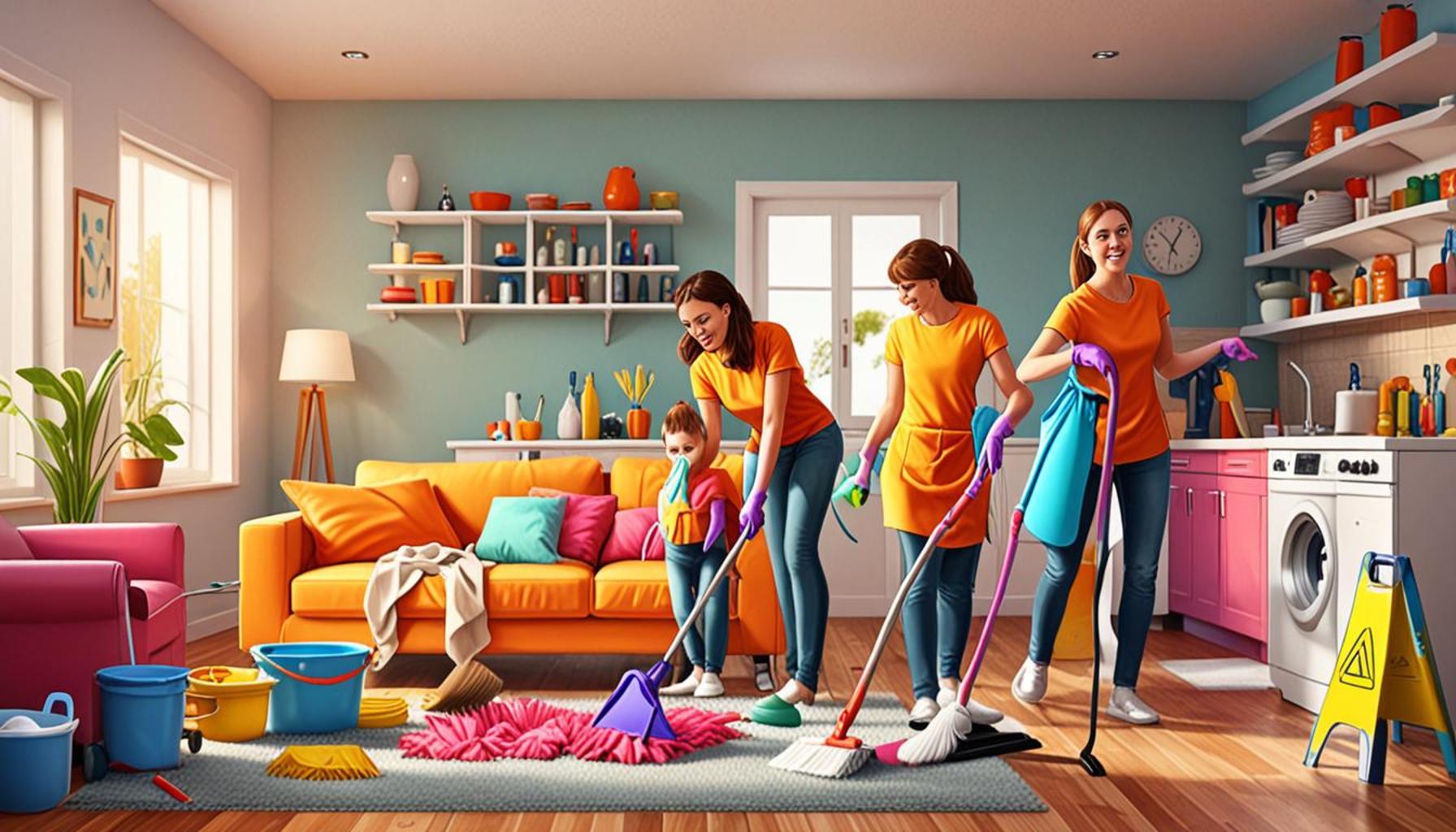
The importance of delegating cleaning tasks among family members
Understanding the Importance of Delegating Cleaning Tasks
In today’s fast-paced world, managing a household can feel overwhelming. Many families are struggling to find a balance between work, school, and personal time. Delegating cleaning tasks among family members is not just a helpful strategy; it’s a necessary one. When everyone participates, it cultivates a shared sense of accountability and eases the pressure on one individual.
By sharing household responsibilities, families can:
- Promote teamwork — Working together fosters a sense of unity. Collaborative efforts in cleaning can lead to bonding experiences, such as children assisting their parents in preparing a seasonal cleaning routine, which can be both productive and enjoyable.
- Teach responsibility — Children learn valuable skills when they participate in chores. For example, assigning a child the task of sorting laundry helps them understand the importance of organization and responsibility while also teaching them critical life skills they’ll rely on as adults.
- Simplify tasks — One person’s effort is often not enough to keep a home tidy. By breaking down chores into manageable parts, such as dividing tasks based on age and ability—adults might handle deep cleaning, while kids tackle tidying up toys—families can maintain a consistently tidy environment.
In the United States, a study conducted by the American Psychological Association found that families who delegate cleaning tasks experience a significant decrease in household stress levels. This is particularly relevant when busy schedules leave little time for relaxation or quality family moments. Inventive solutions, like creating a chore chart or employing a point-based system for incentives, can motivate everyone to contribute. When everyone pitches in, the burden of cleaning no longer falls on one person’s shoulders and fosters a cooperative spirit.
Moreover, distributing these chores can lead to better home maintenance. For instance, regular dusting, vacuuming, and organizing can easily be managed if all members are involved. Families who implement these practices often find themselves with a cleaner, more organized living space. Consistent participation can also empower children while ensuring that the home remains a welcoming environment for both family members and guests alike.
The importance of creating a successful cleaning delegation system cannot be overstated. By clearly defining roles and responsibilities, families can enjoy a healthier household dynamic. Implementing tools like checklists or weekly schedules can help to track progress and keep everyone accountable. From fostering essential life skills in children to reducing stress levels for adults, a well-organized approach to cleaning can lead to a more harmonious and pleasant home life. This article will explore various strategies for implementing such a system among family members, ensuring that everyone contributes to a more organized and happy household.
DISCOVER MORE: Click here to learn about essential tools and products
Building a Collaborative Household: The Role of Delegation in Cleaning
Implementing a system of delegating cleaning tasks within a household can lead to a multitude of benefits, transforming the way families manage their time and responsibilities. Creating an environment where each family member contributes to cleaning duties not only fosters a sense of unity but also yields practical advantages that can enhance overall family life.
First and foremost, sharing cleaning responsibilities reduces the burden on one individual, allowing for a more balanced distribution of labor. In many households, one person often takes on the majority of cleaning tasks, leading to feelings of overwhelm and exhaustion. The American Psychology Association has highlighted that families who share chores report lower stress levels, allowing them to enjoy more quality time together without the looming guilt of an unkempt home. Interestingly, this collaborative approach can have lasting positive effects on mental health and family cohesion.
Moreover, involving children in household chores can teach them essential life skills. When assigned age-appropriate tasks—such as sweeping the floor, washing dishes, or even sorting recyclables—children become more familiar with maintaining their living space. This early introduction to responsibility is crucial; studies reveal that children who regularly help out in household activities grow into adults who are better equipped to manage their own homes. They develop a greater appreciation for both hard work and cooperation, understanding that maintaining a household is a team effort.
To truly capitalize on the benefits of delegation, it’s important to approach task assignment thoughtfully. Consider the following strategies:
- Assess Individual Strengths: Each family member has unique skills. Identify what tasks they enjoy or excel at—whether it’s doing laundry, cooking, or cleaning bathrooms—and assign those tasks accordingly.
- Create a Chore Chart: Visual reminders can help family members stay on track. A chore chart can outline who is responsible for what on a daily or weekly basis, providing clarity and reducing disagreements over who does what.
- Implement a Rewards System: To encourage participation, consider establishing a rewards system where family members earn points for completing their chores, which can be traded in for small rewards or privileges.
- Encourage Feedback: Regular family meetings to discuss what’s working and what isn’t can lead to better cooperation. Give everyone a chance to voice their opinions on task management, fostering a sense of ownership and pride in the shared living space.
Finally, consistent participation in cleaning tasks does not only lead to a cleaner home but can also nurture family bonds. The act of working side by side, whether through a deep clean or simply tidying up, creates opportunities for conversation, laughter, and shared accomplishments. As chores become less of a chore and more of an opportunity for teamwork, families find themselves growing closer together.
In conclusion, the significance of delegating cleaning tasks among family members cannot be overlooked. By sharing responsibilities, families not only lessen individual burdens but also promote teamwork and enhance important life skills among children. As we delve further into practical strategies to implement this methodology, families can discover newfound harmony and efficiency in their homes.
| Advantage | Details |
|---|---|
| Enhanced Collaboration | Delegating cleaning tasks fosters teamwork, encouraging family members to work together towards a common goal. |
| Time Management | Sharing responsibilities allows for more efficient use of time, enabling families to enjoy quality moments together rather than being overwhelmed by cleaning chores. |
By delegating cleaning tasks among family members, families can significantly reduce individual stress. This approach promotes a sense of accountability and teaches children important life skills. Engaging children in household chores can also build a sense of responsibility and independence, preparing them for future endeavors. Moreover, conducting regular family meetings to discuss chores can lead to better organization and communication within the household, ensuring everyone is informed and involved.Families that engage in shared cleaning routines might notice improved relationships. Working together towards a tidy home can create a sense of accomplishment and unity, enhancing familial bonds. This strategy also allows parents to model positive behaviors for children, cultivating a culture of cooperation that extends beyond household tasks. With every member contributing, the home environment becomes more harmonious, reflecting a team-oriented attitude that can benefit all aspects of family life.
DON’T MISS: Click here to learn more about staying organized
Fostering Independence and Accountability Through Delegation
In addition to enhancing teamwork and teaching valuable life skills, delegating cleaning tasks serves as a practical means of fostering independence among family members—especially for younger ones. When children are given specific responsibilities at home, they gain a sense of autonomy that can significantly influence their growth. Various educational institutions across the United States advocate for the inclusion of chores into family life as a way to build self-sufficient adults. Tasks such as making their own beds, cleaning their rooms, or even preparing simple meals can instill a sense of accomplishment that translates into confidence in other areas of their lives.
This independence is not limited to children; involving all family members encourages accountability. When each person knows they have a specific role to play, they are less likely to resist participation. A study published in the Journal of Family Psychology suggests that households where duties are clearly assigned experience less conflict. This clarity helps set expectations and promotes communication, ensuring all family members understand their contributions to the cleaning routine, thereby creating a more harmonious environment.
Furthermore, as families navigate busy schedules filled with extracurricular activities, work commitments, and social obligations, the need for a collaborative cleaning strategy becomes even more pressing. COVID-19 has redefined the traditional structure of family time and responsibilities, with many families now spending increased time at home. This new reality places a premium on maintaining a clean and organized environment, making it essential to involve every family member in the cleaning process.
Establishing a cleaning schedule that accommodates everyone’s availability can effectively break down preconceived notions that cleaning is solely a “parent’s job.” For instance, teens might be assigned kitchen clean-up duties after dinner, while younger children can be responsible for tidying up their play areas. By tailoring tasks to fit the dynamic of the household, families create a systematic approach to cleaning that is adaptable and effective.
The utilization of modern technology can further enhance this delegation process. Digital chore apps are becoming increasingly popular amongst families across the U.S., providing platforms for assigning, tracking, and completing chores. These tools often include reminders and rewards systems to keep everyone motivated. Studies indicate that families who harness technology for chore management sees a higher rate of task completion, thus reinforcing the importance of shared responsibilities.
Moreover, the act of cleaning does not have to be a monotonous routine. Infusing creativity into chores can change the perception of cleaning from a necessary task to a fun activity. For example, turning on music can transform cleaning time into a household dance party, enabling family members to bond while accomplishing their cleaning duties. This approach not only makes chores more enjoyable but also strengthens relationships, as family members learn to collaborate and communicate in a relaxed atmosphere.
It is important to note that while delegation promotes numerous benefits, it’s crucial to remain flexible and understanding. Individuals might have varying levels of commitment or ability to complete tasks at times; navigating these changes with empathy can enhance family dynamics. With open communication, families can adjust roles and responsibilities as necessary, ensuring that each member feels valued and respected within the household.
DON’T MISS: Click here to discover eco-friendly cleaning solutions
Conclusion: The Transformative Power of Task Delegation in Family Life
Ultimately, the act of delegating cleaning tasks among family members transcends mere household chores; it creates a framework for shared responsibility, mutual respect, and personal growth. As families adapt to the evolving dynamics of modern life, particularly in the wake of challenges like the COVID-19 pandemic, recognizing the significance of teamwork and collaboration has never been more essential. Strengthening bonds through shared responsibilities cultivates an environment where all members, from the youngest to the eldest, feel valued.
Empowering children and adolescents with age-appropriate tasks not only fosters their independence but also equips them with crucial life skills that will serve them well beyond the home environment. Studies suggest that young people who participate in household cleaning are more likely to excel academically and socially. Moreover, the introduction of technology, such as digital chore apps, further streamlines this process, enhancing engagement and accountability within the household.
As families navigate busy lives, the ability to share tasks effectively has profound implications for creating harmony and reducing conflict. By embracing a collective approach to cleaning, families can transform routine chores into opportunities for bonding, laughter, and creativity, thus nurturing both relationships and a clean living space. In conclusion, delegating cleaning tasks is not merely about maintaining order; it is an invaluable practice that enriches family life, supports individual development, and fosters a sense of community within the household. Let us take the crucial step towards a more engaged and cohesive family environment by making cleaning a shared priority.